If you’ve searched for “antithetical meaning,” you’re probably trying to understand a word that shows up in essays, debates, books, or serious discussions online. It’s not internet slang like “LOL” or “IMO,” but it still appears a lot in modern writing and even in social media arguments.
The word antithetical describes something that is completely opposite or fundamentally contradictory to something else. When two ideas, values, or actions are antithetical, they cannot logically coexist because they directly oppose each other.
In modern online conversations—especially on platforms like Reddit, Discord, or long-form Twitter threads—people often use antithetical to emphasize strong disagreement between beliefs, behaviors, or ideologies.
This guide breaks down the antithetical meaning in simple English, shows how people actually use it, and explains when it makes sense to use it yourself. This guide is updated for 2026 and written for clarity, not academic jargon.
What Does Antithetical Mean in Chat or Text
Antithetical means directly opposite, completely contradictory, or fundamentally incompatible.
In simple terms:
If something is antithetical to something else, it goes against it in a deep or core way.
Simple Definition
Antithetical = completely opposite in ideas, beliefs, or nature.
It’s often used when comparing:
- Values
- Beliefs
- Behaviors
- Philosophies
- Political ideas
- Moral viewpoints
Quick Example
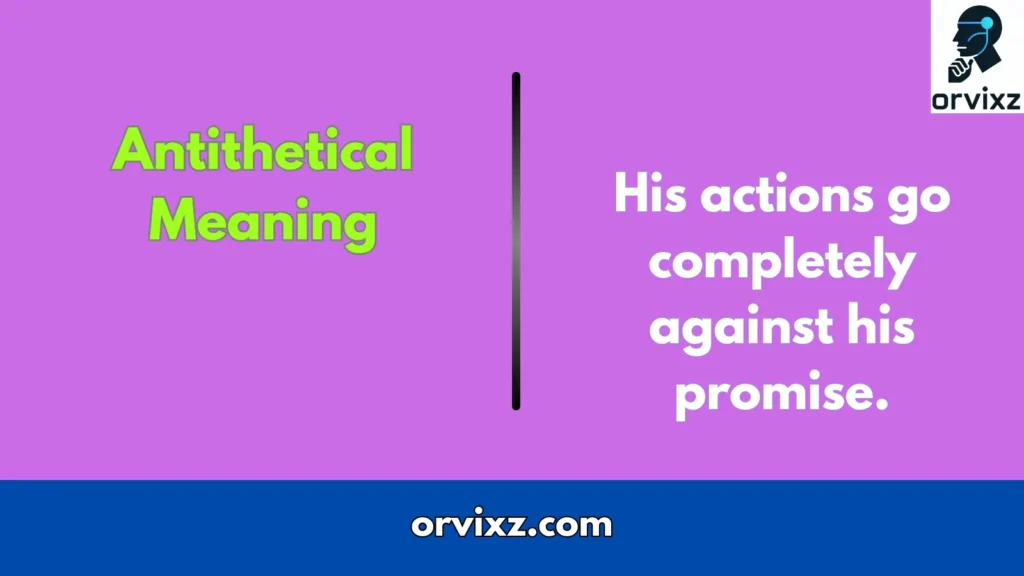
- “His actions are antithetical to what he promised.”
Meaning: His actions go completely against his promise.
Word Origin
The term comes from the Greek word “antithesis,” which means a direct contrast or opposition between two things.
Over time, antithetical became a common word in:
- Academic writing
- Political commentary
- Philosophy
- Online debates and opinion pieces
Today, it still carries a formal tone, but you’ll see it in internet discussions when someone wants to sound precise or analytical.
How People Use Antithetical in Real Conversations
While antithetical isn’t casual slang, it appears frequently in more thoughtful online discussions.
You’ll often see it used on:
- Reddit debates
- Discord community discussions
- Twitter/X argument threads
- Opinion posts
- Blogs and essays
- Forum discussions
- Political commentary
When It Feels Natural
People typically use antithetical when they want to describe strong ideological conflict.
Common contexts include:
- Politics
- Ethics
- Culture discussions
- Philosophy
- Social issues
- Business leadership
Example:
“His leadership style is antithetical to the company’s values.”
When It Sounds Awkward
It can feel unnatural in casual chat.
Example of awkward use:
“Bro that pizza is antithetical.”
That sounds strange because antithetical works best for ideas or beliefs, not everyday objects.
Tone and Intent
Using antithetical usually signals a tone that is:
- Analytical
- Serious
- Critical
- Thoughtful
- Academic
It’s rarely used jokingly or sarcastically.
Real Life Examples of Antithetical in Text Messages
Here are realistic examples that show how the word appears in everyday writing and online discussion.
Example 1
Message:
“His actions are completely antithetical to what the company claims to stand for.”
Meaning:
The person’s behavior contradicts the company’s values.
Example 2
Forum post:
“Censorship is antithetical to free speech.”
Meaning:
Censorship directly opposes the idea of free speech.
Example 3
Reddit comment:
“Those policies are antithetical to innovation.”
Meaning:
Those policies make innovation harder or impossible.
Example 4
Debate discussion:
“Authoritarian leadership is antithetical to democracy.”
Meaning:
Authoritarian rule conflicts with democratic principles.
Example 5
Essay sentence:
“Greed is antithetical to the spirit of charity.”
Meaning:
Greed and charity are fundamentally opposed values.
Common Mistakes & Misunderstandings
Many people misunderstand antithetical meaning, especially if English isn’t their first language.
Here are the most common mistakes.
1. Thinking It Just Means “Different”
Antithetical does not mean simply different.
Example:
Wrong interpretation
“Tea and coffee are antithetical.”
Correct idea
“Greed and generosity are antithetical.”
The word describes deep opposition, not minor difference.
2. Using It for Random Objects
It works best with:
- Ideas
- Principles
- Values
- Philosophies
- Behaviors
Not everyday objects.
3. Confusing It With “Hypothetical”
These two words sound similar but mean completely different things.
- Antithetical → opposite or contradictory
- Hypothetical → imaginary or theoretical
Example:
Wrong: “That’s an antithetical situation.”
Correct: “That’s a hypothetical situation.”
4. Overusing It in Casual Chat
In texting or casual conversation, people usually prefer simpler words like:
- opposite
- against
- contradicts
Using antithetical too often can sound overly formal.
How to Respond When Someone Uses “Antithetical”
If someone uses the word in conversation, you usually don’t need a complex response.
Here are safe ways to reply.
Simple Responses
You can respond with:
- “Yeah, that completely contradicts it.”
- “That’s basically the opposite idea.”
- “I see what you mean.”
When to Ask for Clarification
If you’re unsure what they mean, you can ask:
- “Do you mean it directly contradicts it?”
- “So you’re saying it goes against the main idea?”
Most people will gladly explain.
Is “Antithetical” Still Used in 2026?
Yes. Antithetical is still widely used in 2026, especially in thoughtful discussions.
However, it appears more in long-form conversation than in quick chat.
Where It’s Most Common Today
- Reddit debates
- Online essays
- Academic writing
- Political commentary
- Opinion journalism
- Forum discussions
Generational Usage
Millennials and professionals
More likely to use the word in writing.
Gen Z
Understand it but often choose simpler words like:
- opposite
- against
- contradicts
So the word isn’t disappearing—it’s simply used in more serious contexts.
Related Words & Similar Terms
Understanding related terms can make the antithetical meaning easier to grasp.
Opposite
The simplest version of antithetical.
Example:
Hot is the opposite of cold.
Contradictory
Something that directly conflicts with another idea.
Example:
His statements were contradictory.
Opposing
Two ideas working against each other.
Example:
Opposing viewpoints in a debate.
Antithesis
The noun form of antithetical.
Example:
“Freedom is the antithesis of oppression.”
FAQs:
What does “antithetical” mean in simple words?
It means completely opposite or directly contradictory to something else, especially ideas, values, or beliefs.
What does “antithetical meaning in text” refer to?
In text or online discussion, it usually describes something that strongly opposes a principle, value, or argument.
Is antithetical a negative word?
Not necessarily. It simply describes strong opposition between two things, but it often appears in criticism or debate.
Can antithetical be used in casual conversation?
Yes, but it sounds more natural in formal writing, debates, essays, or thoughtful discussions.
What is the difference between antithetical and opposite?
“Opposite” is simpler and general.
Antithetical usually refers to deep conflict between ideas or values, not just basic differences.
Conclusion:
Understanding the antithetical meaning is easier than it first appears.
The word simply describes two things that fundamentally oppose each other, especially when it comes to beliefs, values, or principles.
Key takeaways:
- Antithetical = completely opposite in ideas or values
- It’s commonly used in debates, essays, and discussions
- It sounds more formal than everyday speech
- It works best when describing conflicting principles or philosophies
Once you recognize how it’s used, you’ll start noticing it everywhere—from online debates to opinion articles.
And if you ever see someone say something is “antithetical to their values,” you’ll immediately understand what they mean.
What’s your favorite interesting English word you’ve seen online recently? Drop it in the comments!

I’m the voice behind upvoros mixing creativity with humor to craft puns that hit just right. When I’m not playing with words, I’m busy making content that feels fun, fresh, and relatable.